750,000 trailers, 20 years later
What Chris Hines discussed at FreightWaves F3 2026
The fleet hasn’t changed. How it moves has.
Twenty years ago, North American rental and leasing pools held about 750,000 trailers. Today they hold about 750,000 trailers.
That was the number REPOWR CEO Chris Hines put on the table at FreightWaves F3 2026, where he joined host Craig Fuller, CloneOps founder and CEO David Bell, and Carrier1 founder and CEO Travis Rhyan for the Freight in Review roundtable. The panel covered a lot of ground: AI, autonomy, brokerage, venture money. But Chris kept coming back to the asset underneath all of it, and to the one thing that has actually changed about it.
Here's what we took away.
- Buyers aren't the bottleneck. Roadmaps are.
Asked to sum up the last 12 months, the panel agreed on two things. There's more optimism around spend and budgets than there has been in years, and M&A is starting to break loose. But there's also more noise than ever: new companies, new faces, and new concerns around fraud, compliance, and liability.
Chris named the real obstacle for anyone selling into freight right now: "There are 13 businesses in there trying to compete for that space." Travis put it the same way. It's not an unwillingness to buy. Large carriers and 3PLs already have a year of internal AI and automation projects queued up, so a new tool has to fit one of them, speed one up, or replace several at once.
That tracks with what we heard on the spring conference circuit: AI adoption without operational discipline doesn't move the needle. The tools that earn roadmap space are the ones that show ROI on day one.
- 750,000 trailers then. 750,000 trailers now.
"A lot of things change drastically and fast, yet a lot stays the same," Chris said. The company names in the rental and leasing business have turned over. The box count hasn't.
What's true today that wasn't true 20 years ago? "The ability to automate asset moves."
A one-way trailer move used to be one of the hardest things to execute in trucking. Someone had to find the trailer, find a carrier headed the right direction, agree on terms, verify insurance, and track it to the drop. So most fleets didn't. They deadheaded their own equipment back, or let it sit.
That's not a small problem. In REPOWR's H1 2026 State of Trailer Utilization report, 83% of rentals ended in a different market than where they started. Freight moves in one direction. Trailers pile up where they land. We've written about why trailer imbalance happens and what it costs: empty repositioning miles running 10 to 12% annually for many fleets, at roughly $2,400 per trailer per year.
- It's a capex play
Once one-way moves are automated, the math on the whole fleet changes. In Chris's words: "You don't need 6 million trailers in total across North America to move freight when 4.5 million optimized trailers can do the same job."
That's the shift from owning more equipment to positioning the equipment you have. It's the same logic behind on-demand equipment: if trailers move where demand is, you need fewer of them sitting around just in case.
- Autonomy will shrink the pool, not erase it
Craig raised a theory making the rounds: autonomous trucks, or self-propelled boxes, will make trailer pools obsolete. Chris didn't buy the timeline.
Converting millions of trailers into self-moving assets takes "an astronomical amount of capital," he said. He expects autonomy to make pools smaller and more optimized, but puts fully self-moving equipment at least 15 years out. And autonomous trucks still have to beat intermodal on long-haul lanes, where trains can double-stack.
Travis added the carrier view. His customers piloting autonomous linehaul are using it to cut cost per mile while keeping drivers on regional runs, which helps retention. Either way, the trailer is still the unit that has to be in the right place.
- Relationships still close the deal
The panel's closing question was what's real and what isn't for the next three to five years. Travis and David both predicted traditional TMS front ends will fade as AI agents take over standard workflows. Chris's answer was simpler: "What stays real is human relationships." Sales will get more data-driven. Customer care won't stop needing people.
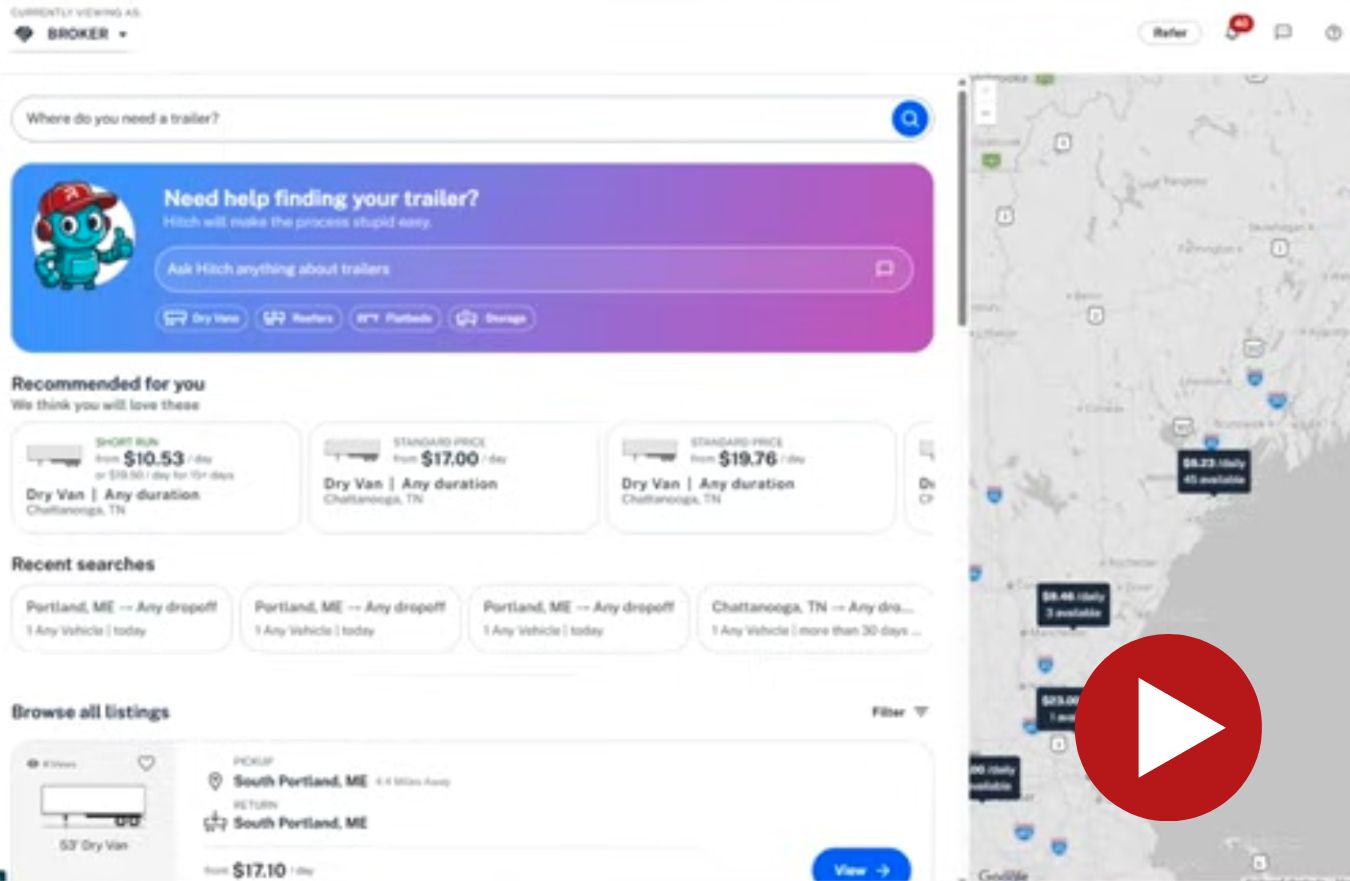
That's how we think about automation at REPOWR, too. The software should handle the repetitive moves so your team can spend time on customers, carriers, and exceptions. It's the same reason brokers use REPOWR to put trailers in their carriers' hands without adding headcount or equipment.
What this means for trailer owners
If the box count is flat and freight still flows one way, the advantage goes to fleets that can reposition automatically, without phone calls, spreadsheets, or a dispatcher chasing every move.
That's why we built TOP, the Trailer Optimization Platform. TOP monitors trailer levels by market, flags surplus before it goes idle, and auto-lists that equipment on the REPOWR marketplace, where 10,000+ vetted carriers move it as part of their normal work. When a move is urgent, LoadAway brings in a broker to coordinate and pay for it.
The result is what Chris described on stage: a one-way move that used to be a headache becomes an automated, revenue-generating part of how the network runs.