$2.1B in New Trailers, Up to 40% Still Idle
September trailer orders jumped 385% to 43,059 units.
The industry just ordered 43,059 trailers in one month
U.S. trailer net orders hit 43,059 units in September 2026, according to FTR Transportation Intelligence. That's up 78% from August and 385% from a year earlier, the highest monthly total since December 2022. ACT Research counted 42,700, up 311%.
It's the strongest start to a trailer ordering season in years. And it raises a question nobody in the order data is asking: what happens to all those trailers once they're delivered?
That's roughly $2.1 billion in new capex
A new 53-foot dry van typically runs $43,000 to $60,000 depending on spec. Reefers cost more; flatbeds cost less. At a blended average near $49,000, September's orders represent about $2.1 billion in equipment spending, committed in a single month.
That capital comes with a long tail. Every trailer on the order book will need insurance, PM cycles, tires, inspections, and financing for years. Those costs start the day it's delivered, whether it's hauling freight or sitting in a yard.
Meanwhile, up to 40% of existing trailers are sitting still
Industry estimates put trailer idle time at 30% to 40% of a trailer's working life. That doesn't count the empty miles burned repositioning equipment to where it's actually needed.
An idle trailer isn't a neutral asset. It depreciates, it gets insured, it gets inspected, and it takes up yard space. It does all of that while earning nothing.
The problem usually isn't demand. REPOWR's own marketplace data shows 77% of listed trailers generate at least one revenue booking. Trailers sit because they're in the wrong market at the wrong time. That's a positioning problem, and buying more trailers doesn't solve it.
Why fleets are buying anyway
The surge makes sense on its own terms. FTR points to three drivers:
- Pent-up replacement demand after an extended stretch of weak equipment purchasing.
- Price protection. 2027 order books opened early, and fleets expect more tariff-related price increases.
- Truck uncertainty. With the Class 8 pre-buy winding down and EPA's 2027 NOx rules unsettled, some spending is shifting from tractors to trailers.
None of that is wrong. Aging trailers need replacing, and locking in price ahead of increases is sound planning. But replacement and price protection are capital decisions. Utilization is an operating decision, and it's the one that determines whether that capital pays off.
As REPOWR noted in its H1 2026 State of Trailer Utilization report, both ACT and FTR have said a durable upcycle needs higher utilization, not just more equipment on the ground.
43,000 new trailers means 43,000 more moves to make
Here's the part the order data doesn't show. Every one of those 43,059 trailers is another unit that needs a load, a move, and, eventually, a repositioning plan. Add them to a network already running at 60% to 70% utilization, and the imbalance gets bigger, not smaller. More trailers end up in surplus markets. More empty miles go to chasing shortages somewhere else.
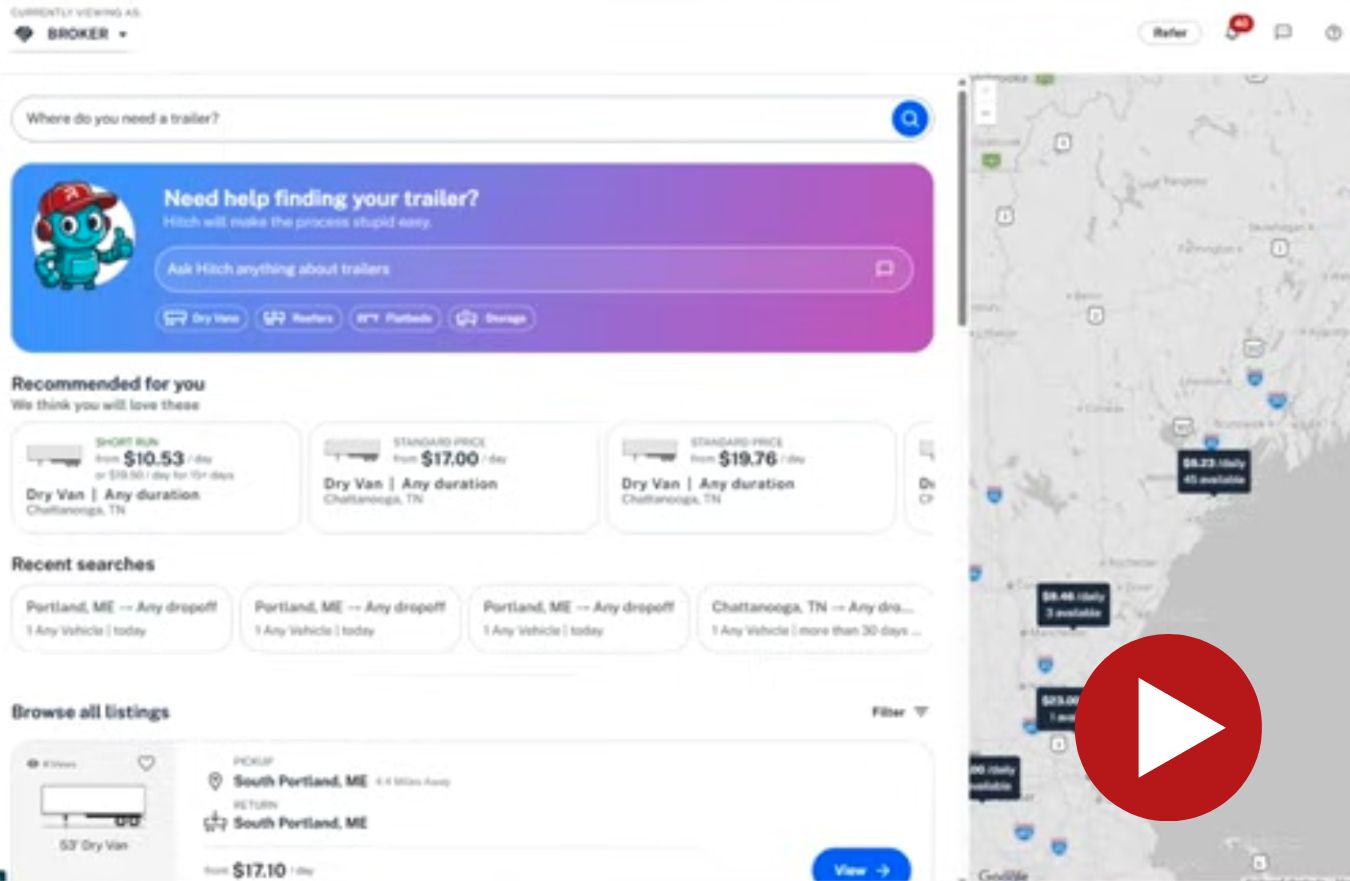
The fleets that get a return on this capex will be the ones that treat utilization as a system, not a spreadsheet. That's what REPOWR's Trailer Optimization Platform (TOP) is built for:
- See supply and demand by market and lane, so you know where trailers are piling up and where they're short.
- Set utilization targets and thresholds for each location instead of managing by gut feel.
- Turn repositioning into revenue. TOP automatically surfaces opportunities to move surplus trailers through REPOWR's network of 60,000+ trailers, so carriers pay to pull equipment you'd otherwise pay to move.
New trailers and idle trailers aren't separate problems. Without a way to keep both moving, this year's order is next year's yard.
Before you sign the next trailer PO
Ask four questions first:
- What's our real idle rate, by market? A fleet-wide average hides the yards where trailers sit for weeks.
- Where are we buying capacity we already own? A shortage in one market and a surplus in another is a repositioning problem, not a purchasing one.
- What does an idle day cost us? Count insurance, PM, financing and yard space, not just the purchase price.
- Can idle trailers earn while they wait? Surplus units listed on a sharing network can generate revenue instead of carrying cost.
The trailer order surge is a bet on freight demand. Make sure the trailers you already own are part of that bet.
See where your idle trailers are and what they could earn. Book a TOP demo or download the State of Trailer Utilization H1 2026 report.